Oct 11, 2026

A Tasty Aside.


Over the last few months I have been getting into homebrewing, particularly mead. My very first project was mostly a failure but I am quite happy to say that my last project; a pyment, was rather fruitful. Wanting to strike while the iron was hot and feeling inspired by that fall chill, I decided to try and make something autumnal and with warm spices for the coming holidays. I was split between using cranberry juice or cider as the base before remembering cranapple is a common and delicious pairing. 


Unlike the pyment I made, which mostly followed a recipe I found (The biggest difference being I used frozen juice concentrate and actual wine yeast), for this cranberry cyser I made the recipe myself. In a way this post exists to keep that recipe and hopefully later document its success. The recipe I ended up using is as follows:

  •     2 Cups strong black tea (I used 3 tea bags and let steep for about an hour)
  •     2 Oranges worth of juice and zest (Average size)
  •     1.3 Pounds of honey
  •     1.56 Liters of black currant cranberry juice
  •     1 Packet of EC1118 yeast
  •     Unmeasured amount of cider (Filled the rest of the 1 gallon jar)

I ended up using a mixed black currant and cranberry juice mix because that is just what they had at the store I went to, I also used exactly 1.56 liters because that was just the size the bottle came in. Black currant still feels evocative to the cold months but I did try to use more tea to try and better balance out the sweetness of the mix. To be clear of the process I first added the honey, measuring with a scale (and still adding .3 pounds more than planned) then added the tea, orange juice, and currant & cranberry juice. I mixed thoroughly while there was still space before filling the rest of the 1 gallon jar with cider (leaving a little room for the yeast I was blooming in warm water and spoonful of honey). I mixed the cider in before taking my initial gravity reading of 1.080, then added the yeast and zest before mixing one last time and sealing. I do plan on adding spices but I will be doing so after primary fermentation to maintain the flavors of them. I only really did the orange zest now because I already had the oranges to juice anyways and wanted to get the most out of them. For the spices my plan right now is to perhaps just use a premade mulling spice mix. I have seen some that come in bags that steep like tea, which seem like a convenient option to avoid having to deal with a bunch of particulates but I may just get all the individual seasonings and do it myself the hard way.

Of note: while I was checking on it today it appeared some of the liquid (or foam?) managed to rise up through the air lock. So I guess don’t fill yours up so much and or don’t seat your air lock so deep kids ¯\_(ツ)_/¯


PS.

I know I have been a bit of an absent father to this blog but I swear I will come back with the milk and cigarettes I left for. I have been thinking of writing a bit of a diatribe about some of the philosophy behind how I want to run the new game I’m making (WIP title: Boat Haus) and maybe a little about the ideas behind the game itself. I will also be at a con too local to name without kinda doxxing myself and might find something to write about while there. At the very least in around a month's time there will be a part 2 to this aside updating you with how the brew went. To the few that read this I hope you are well and remember to drink life to the lees.

Mar 9, 2025

Concealability in Cyberpunk 2020: A mechanic at odds.


I love Cyberpunk 2020, and I would be lying if I told you it wasn't an influential work in just about all of my creative projects. Needless to say, in the cyberpunk adjacent (I would say Neon Liberal) TTRPG I am currently working on, Grunts PSI, I have often been looking at Cyberpunk 2020's world and rules for inspiration in my design. There are a few mechanics from CP2020 that I have thought about implementing into Grunts PSI, but I find their implementation disappointing even in the context of CP2020. There are a few that stick out to me, but the one we will discuss is concealment.
 

Mechanically speaking I find the concealment rules on paper to be… passing but in practice it's a bit weak. How the system works is that every weapon is given a concealability stat that denotes the level of wear required to conceal the item.  
 

P ("Pocket, Pants Leg or Sleeve")
J ("Jacket, Coat or Shoulder Rig")
L ("Long Coat")
N ("Can't be Hidden")
 

This system is light enough to not get in the way while maintaining enough nuance to be useful but I find I don't jive with it because I feel myself often forgetting about it, and to a degree I feel that it breaks down because of the world of CP2020.
 

Largely, it comes down to one question: Why does it matter? The concealment rules section pretty much just says that it would "cause trouble" if you appear to be visibly armed and that it may be important to conceal holdout weapons. The book however never states what may happen, but it does paint a picture of a very different world than ours, one where there are bars for mercenaries, where travel advisories warn visitors to wear body armor, a world where mercenaries can be as famous as rockstars. Yes, you play as "Edgerunners" people at the fringe of society, but the world is already desensitized to the violence that has consumed it; that's how people like Edgerunners are allowed to operate. There is a quote in the Solo section (Page 9), a story from Morgan Blackhand, that talks about how he was hired by Militech after killing a gang member in a bar. The game shows us a world that does not seem like it would care if someone is open-carrying and yet expects us to care.
 

Obviously, the average CP2020 game will likely take players to many different contexts where it would be definitively unacceptable to brandish a weapon or inappropriate to wield a certain level of firepower. However, the resting default will be that it doesn't matter until expressly stated otherwise, a mechanic only remembered when a player feels like adding extra flavor or when a GM wants to catch a player off guard. The concealment rules work to tell you if your weapon is concealed or not but fail to provide any context as to how that might matter. I don't believe just using "common sense" is a good answer when the game takes place in a world with a very different definition of "common sense", but if we are just expecting players and GMs to think about it to get the answer then why even give them mechanics for concealment? Why not just tell them to think about the size of the weapon and what they are wearing to see if it is concealable? It feels like a weird line drawn in the sand for a game that is already pretty feature dense.


The mechanic is a good answer to a question but it's one that just asks more questions which the book then refuses to answer, and is a mechanic that at times feels at odds with the social mechanics of the world.
 

I think by adding some form of threat/heat stat to weapons it would fix much of the issues I have with the sub system. By slapping a number on a weapon and giving as brief an explanation as was for concealment I think it would go a long way. This, of course, isn't a perfect solution; in terms of house rules, it would be a fair amount of work and there wouldn’t be a place in the weapon stat block to note it. It could be simplified down to giving each weapon type a threat level but so much of outfitting a character in cyberpunk to me is all the little difference in equipment you have to weigh, and it would kind of go against that. In terms of adding to Grunts PSI, it would be good, albeit annoying, as I would have to squeeze in two more stats onto the weapon section of the character sheet and weapon sheets. I will probably try to think of another solution, one that would mean less work, but for now this is the best I got. If you have seen any interesting concealment rules, I would be very interested in seeing them.


PS. I think my next blog will be talking about cyberpunk’s availability and or surgery codes, and I swear it won’t take me a year to write the next one.

Feb 4, 2024

Character Sheets and TTRPG Visual Identities.

The character sheet to a game is important in many ways, but one way I haven't seen discussed too much is how a character sheet reflects the game's visual identity. TTRPGs, of course, use the theater of the mind, but I believe this is why the visuals used are so important; books often use artwork to show what the world looks like, but we (probably) don't play games with the book out gawking at the pretty art on pages, we play with character sheets.

Primal Quest Character Sheet


We can use stunning art to great effect as we do in books such as that seen in the Primal Quest's character sheet; it's beautiful and sets the stage for our theater quite well. Art like this does take a fair amount of space, and a minor but notable nitpick about the character sheet is that it lacks any space to note your weapon's durability, which may be caused by prioritizing visuals over function. (Still a fun game do recommend)

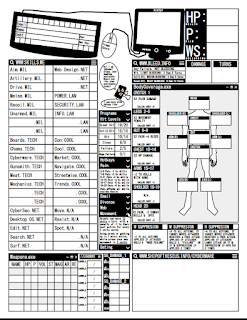
GRUNTS PSI Character Sheet


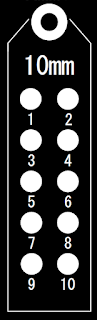
Mag Counter[*1] For Dead Project

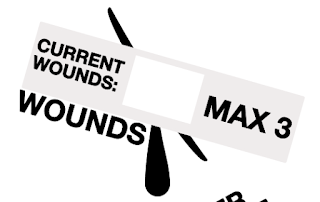
Wound Counter For Project That Was Never Real


One form of reflecting visual identity is using diegetic elements and skeuomorphism. I use these ideas often in my character sheet designs. I believe they can be used to great effect to reinforce visual identity and use the limited space on a sheet effectively, as they work both as usable elements and as visual fluff.

Cock C.O.C Character Sheet
It doesn't have to be fancy; a good design and font can go a long way. Invoking the right vibes is really all that matters; if your game is all about office life and the sheet looks like an Excel sheet, it works. The touches in the corners of the Call Of Cthulhu sheet are small but go far to add to that 1920s vibe.

Mostly, with this post, I wanted to rant a bit about cool sheets get you to think about your character sheet's visual identity and message to its user. I appreciate the craft of making a good character sheet and all the different ideas and philosophies behind it, so I wanted to get you thinking and to share one of the major factors I consider when making a character sheet.


[*1: My gun-nerd self can't post this without noting that this design was based loosely on a Glock mag, which doesn't count down to 1 but instead stops higher, usually at 4. This counter is also flawed in another way, as there is still a round in the feed lips]

A Tasty Aside.

Over the last few months I have been getting into homebrewing, particularly mead. My very first project was mostly a failure but I am quite ...